Showing posts with label wooden sailboat. Show all posts

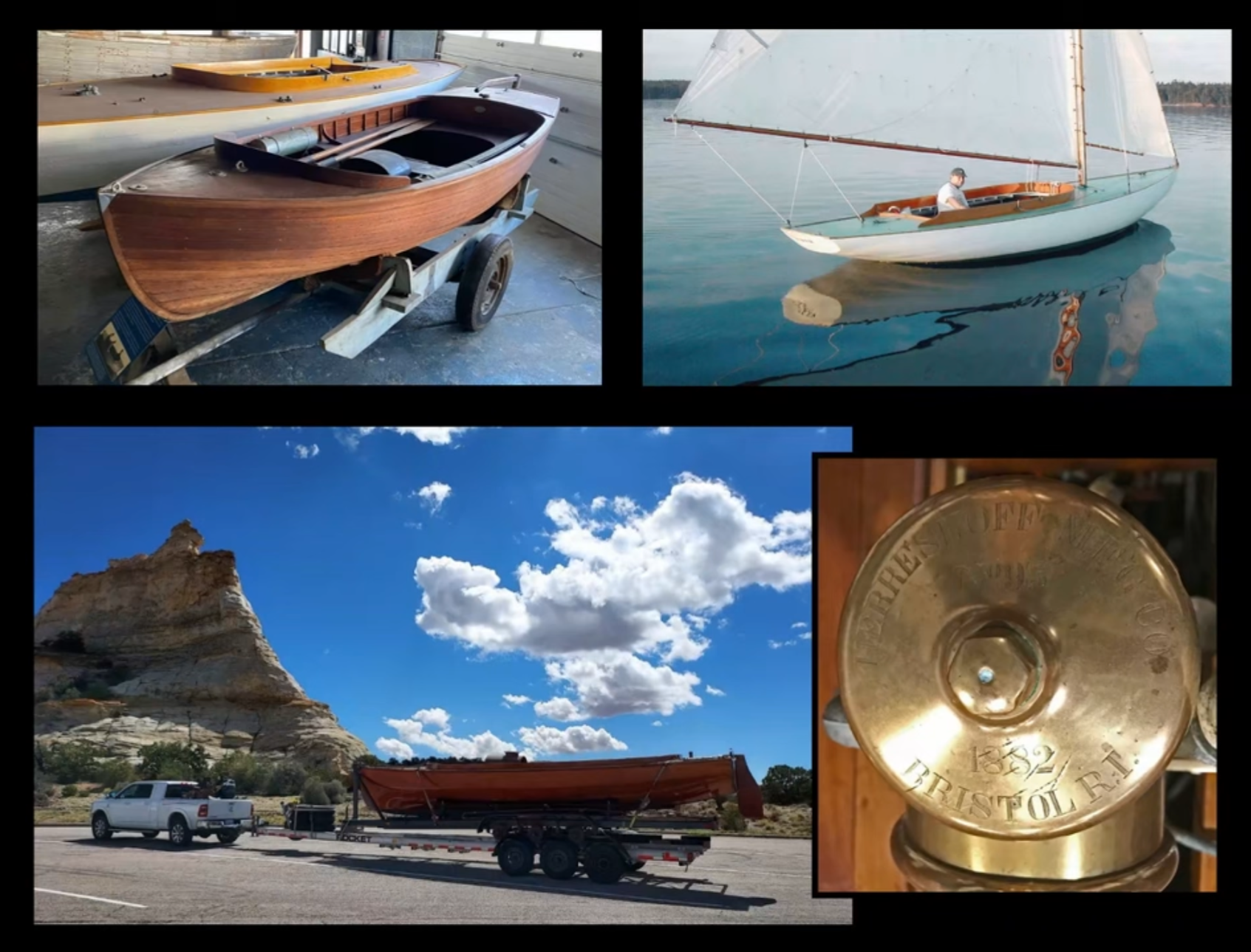
Herreshoff sailing yacht Doris, aka Vayu or Huntress


The sailing yacht “Doris,” also known as Vayu or Huntress in various stages of her life, stands out as a significant piece of the Herreshoff Manufacturing Company’s legacy. Designed by Nathanael Greene Herreshoff and launched in 1905, Doris is often celebrated for her elegance, innovative design, and the craftsmanship inherent in her construction. Here are some details about her:

Q: What makes the Doris yacht special in maritime history?

A: Doris is one of the largest all-wood sailing yachts built by the Herreshoff Manufacturing Company, noted for her exceptional design and beauty. At the time of her launch, she was among the most advanced and elegantly crafted sailing yachts, exemplifying the pinnacle of early 20th-century yacht design and luxury. Her sleek lines, impressive rig, and the use of high-quality materials underscore the Herreshoff commitment to excellence and innovation.

Q: How did Doris contribute to Nathanael Herreshoff’s reputation?

A: The construction and performance of Doris reinforced Nathanael Herreshoff’s reputation as a leading naval architect. Her design incorporated many of Herreshoff’s hallmark characteristics, such as a balanced hull, advanced rigging techniques, and an emphasis on speed without sacrificing safety or beauty. Doris served as a testament to Herreshoff’s genius in yacht design, further cementing his legacy in naval architecture.

Q: What happened to Doris over the years?

A: Over the years, Doris underwent several ownership changes and names, including Vayu and Huntress. Despite these changes and the challenges of preservation, efforts have been made to restore and maintain her. Restoration projects aim to bring Doris back to her original splendor, ensuring that this piece of maritime history remains a testament to the Herreshoff Manufacturing Company’s craftsmanship and Nathanael Greene Herreshoff’s design ingenuity.

Q: Why is the preservation of Doris important?

A: Preserving Doris is crucial for maritime history because it allows future generations to witness the technological advancements and aesthetic considerations of early 20th-century yacht design. She serves as a floating museum piece, illustrating the craftsmanship, innovation, and vision of the Herreshoff legacy. Preservation efforts not only honor the past but also educate the public about the evolution of yacht design and maritime engineering.

The story of Doris encapsulates the spirit of innovation that the Herreshoff family brought to yacht design, making her a cherished relic of maritime history.


As an Amazon Associate I earn from qualifying purchases.

Tarkine


As an Amazon Associate I earn from qualifying purchases.

Wulkie

 https://youtube.com/playlist?list=PLc5WdboIheJnIwyZYdtPpyUMVr3WzGZS5&si=rFKPH9cWq4k0K7xI


As an Amazon Associate I earn from qualifying purchases.

XylaCLC


Xyla Foxlin is an American engineer, entrepreneur, and YouTuber known for her tutorial videos on technical projects. Graduating from Case Western Reserve University in 2019 with a B.S.E. in General Engineering focusing on Mechatronics and Creative Technology, she also served as the Executive Director for the non-profit Beauty and the Bolt, aiming to lower entry barriers for women and minorities in STEM fields. Foxlin’s YouTube channel features projects requiring woodworking and engineering skills .


As an Amazon Associate I earn from qualifying purchases.

Goat Island Skiff

 https://www.storerboatplans.com/boatplans/goat-island-skiff-simple-sailing-boat-excellent-performance-lightweight/


The Goat Island Skiff (GIS) is celebrated for its simplicity in construction and sailing, alongside impressive performance capabilities. Designed by Michael Storer in 1993, this sailboat is known for being lightweight, easy to handle, and capable of accommodating up to four adults while maintaining excellent stability and speed. It’s particularly noted for its performance in various sailing conditions, capable of rowing effectively, and even handling a small outboard motor. The GIS features a hull weight of approximately 130 pounds, making it lighter than many racing dinghies, such as the 14ft Laser, and thus easily transportable.


The construction of the GIS emphasizes simplicity with a reduced number of parts and the use of plywood, aiming for a balance between lightness and structural integrity. The design incorporates a 105 square feet sail, optimized for efficiency and control. Its dimensions are 15’ 6” in length and 5ft in beam, with a shallow draft of 4 inches, enabling the skiff to navigate in varied water conditions.


A key aspect of the GIS is its balanced design, with minimal rocker and a hull that distributes volume evenly from bow to stern. This results in a boat that maintains course well when heeled and responds effectively to helm inputs, even at extreme angles. The design’s focus on light weight, combined with a rig that minimizes complexity and cost, has made the GIS popular among amateur builders and seasoned sailors alike.


Plans and kits for the Goat Island Skiff are available internationally, catering to DIY builders and enthusiasts who seek a blend of traditional and modern sailing experiences. The active GIS community, particularly on social media platforms, offers support and inspiration for those building or sailing their own skiff   .


As an Amazon Associate I earn from qualifying purchases.

The Spray: Building and Sailing a Replica of Joshua Slocum’s Famous Vessel” by R.D. Culler


“The Spray: Building and Sailing a Replica of Joshua Slocum’s Famous Vessel” by R.D. Culler is a detailed account of the author’s experience constructing and utilizing a replica of Slocum’s celebrated craft, the Spray. Culler shares insights that would interest and assist those contemplating building and sailing a Spray, drawing from his extensive knowledge of traditional wooden boat building methods using wood, iron, and canvas .


As an Amazon Associate I earn from qualifying purchases.

Herreshoff classic yachts

Herreshoff designed some of the most beautiful classic yachts ever built.

These aren’t just boats; they’re floating sculptures crafted with an artistry unmatched by today’s mass-produced hulls.

I’ve owned a few sailboats but never a classic wooden yacht. There’s something entirely different about them—the craftsmanship, history, and sheer presence set them apart from fiberglass hulls.

I’ve collected books on these masterpieces, and the deeper I dive into their design, the more I appreciate them. Sailing has never been just movement. It’s the freedom to wander. Independence from fuel. It’s an adventure. It’s a connection to the past.


As an Amazon Associate I earn from qualifying purchases.

Northwest School of Wooden Boatbuilding

The Northwest School of Wooden Boatbuilding: Preserving Craftsmanship and Tradition

If you’ve ever felt drawn to the elegance of wooden boats—where craftsmanship meets history—then the Northwest School of Wooden Boatbuilding (NWSWB) is worth exploring. Nestled in Port Hadlock, Washington, this school isn’t just about teaching boatbuilding—it’s about keeping a centuries-old maritime tradition alive.

In a world where mass production dominates, NWSWB is a beacon for hands-on learning, offering programs in traditional wooden boatbuilding and modern composites and systems. Students don’t just build boats; they master joinery, lofting, and marine systems, gaining skills that connect them to a lineage of artisans who shaped the seas.

For me, wooden boats have always symbolized a deeper connection to the past. There's something profoundly different about a vessel built by hand—each plank carefully shaped, each joint fitted with precision. Schools like NWSWB ensure this knowledge isn’t lost but passed down to future generations.

If you’ve ever dreamt of crafting your own boat or simply want to appreciate its artistry, this place is worth visiting. Who knows? You might just find yourself on a lifelong journey of craftsmanship and adventure.

More about the school: nwswb.edu


As an Amazon Associate I earn from qualifying purchases.

47-foot Buzzards Bay 30 yacht by Herreshoff

The Aria, HMCo. #566 is a 47-foot Buzzards Bay 30 yacht built in 1902 by the Herreshoff Manufacturing Company of Bristol, Rhode Island. 

The Beverly, Massachusetts Yacht Club ordered the yachts, which were raced as a class. 

The Buzzards Bay 30 class was built to the exact specifications, allowing owners to race in evenly matched boats.

Credits:


The Buzzards Bay 30 class, designed by Nathanael Greene Herreshoff and introduced in 1902, originally consisted of a fleet of yachts built for members of the Beverly Yacht Club and the New York Yacht Club. These yachts were named primarily after native American tribes, following the tradition of the time. Here are the names of the original Buzzards Bay 30s:

1. Quissett
2. Baboon
3. Wamsutta
4. Papoose
5. Mantou
6. Tattler
7. Bonito
8. Nimrod
9. Tango
10. Yucca

Over the years, the fleet has seen changes including restorations, and possibly, name changes for individual boats. Some of these boats have been meticulously restored and are still sailing or displayed, showcasing the timeless design and craftsmanship of Herreshoff. These classic yachts are celebrated for their beauty, performance, and the pivotal role they played in American yachting history.


Q: What distinguishes the Buzzards Bay 30 design by Herreshoff?

A: The Buzzards Bay 30, designed by Nathanael Greene Herreshoff, is a classic sloop that embodies the pinnacle of early 20th-century yacht design, renowned for its elegance, performance, and craftsmanship. Characterized by a sleek, overhanging bow and stern, a relatively narrow beam, and a full keel with a cutaway forefoot, this design optimizes both speed and seaworthiness. The yacht’s rig is a gaff cutter setup, which, combined with its hull design, allows for remarkable upwind performance and stability in a wide range of conditions. The Buzzards Bay 30 also features a spacious and well-appointed cockpit and cabin, making it suitable for both racing and cruising.

Q: How does the Buzzards Bay 30’s design reflect Herreshoff’s design philosophy?

A: The Buzzards Bay 30 reflects Nathanael Herreshoff’s design philosophy, which emphasizes efficiency, simplicity, and elegance. Herreshoff’s approach to yacht design often involved minimizing superfluous decoration while maximizing performance and functionality. The Buzzards Bay 30’s hull shape, with its fine entry and balanced proportions, demonstrates his mastery in creating vessels that are both fast and sea-kindly. The use of high-quality materials and attention to detail in construction further showcase his commitment to excellence and innovation in yacht design.

Q: For what conditions and purposes was the Buzzards Bay 30 optimized?

A: The Buzzards Bay 30 was optimized for the variable wind and sea conditions typical of New England waters, particularly those found in and around Buzzards Bay. Its design is well-suited for coastal cruising and club racing, offering a balanced blend of speed, handling, and comfort. The cutaway keel and efficient rigging system allow it to excel in upwind performance and maneuverability, while its sturdy construction and full keel provide safety and stability in rougher seas. This makes the Buzzards Bay 30 versatile, capable of competitive racing as well as leisurely cruising in a variety of sea states.

Q: What legacy has the Buzzards Bay 30 left in yacht design and sailing?

A: The Buzzards Bay 30 has left a lasting legacy in yacht design and sailing as a quintessential example of classic American yacht design. Its influence can be seen in the emphasis on clean lines, performance-oriented hulls, and efficient rigging in later yacht designs. The yacht is also celebrated for its beauty and timeless appeal, inspiring a renewed interest in classic yacht restoration and preservation. The Buzzards Bay 30 represents a bridge between the utilitarian workboats of the past and the modern leisure sailing vessels, embodying a balance of form and function that continues to inspire admiration and study among yacht designers and sailors alike.


As an Amazon Associate I earn from qualifying purchases.

Herreshoff


As an Amazon Associate I earn from qualifying purchases.

Laminated hardwood boat stem

 A great example of how to go from the design drawing to the lofting table, to a holding rig to the strong and accurate boat stem in 24 hours. Great explanation!


As an Amazon Associate I earn from qualifying purchases.

Strip-planking and fairing wooden sailboat


As an Amazon Associate I earn from qualifying purchases.

Half-hull mahogany model


As an Amazon Associate I earn from qualifying purchases.

Victoria


As an Amazon Associate I earn from qualifying purchases.

Heaven 12 1/2 design by Joel White - DIY part 1

 Episode 1 choosing the boat


As an Amazon Associate I earn from qualifying purchases.

apt quotation..